Why does your breaker keep tripping — and when is it not normal?
It's the same breaker, the third time this week, and you're standing at the panel in the hallway wondering if you're about to become the person who just leaves it off. A breaker tripping isn't a malfunction — it's the safety device working exactly as designed. The question that actually matters is what it's protecting you from, and that's answered by how it trips, not how often.
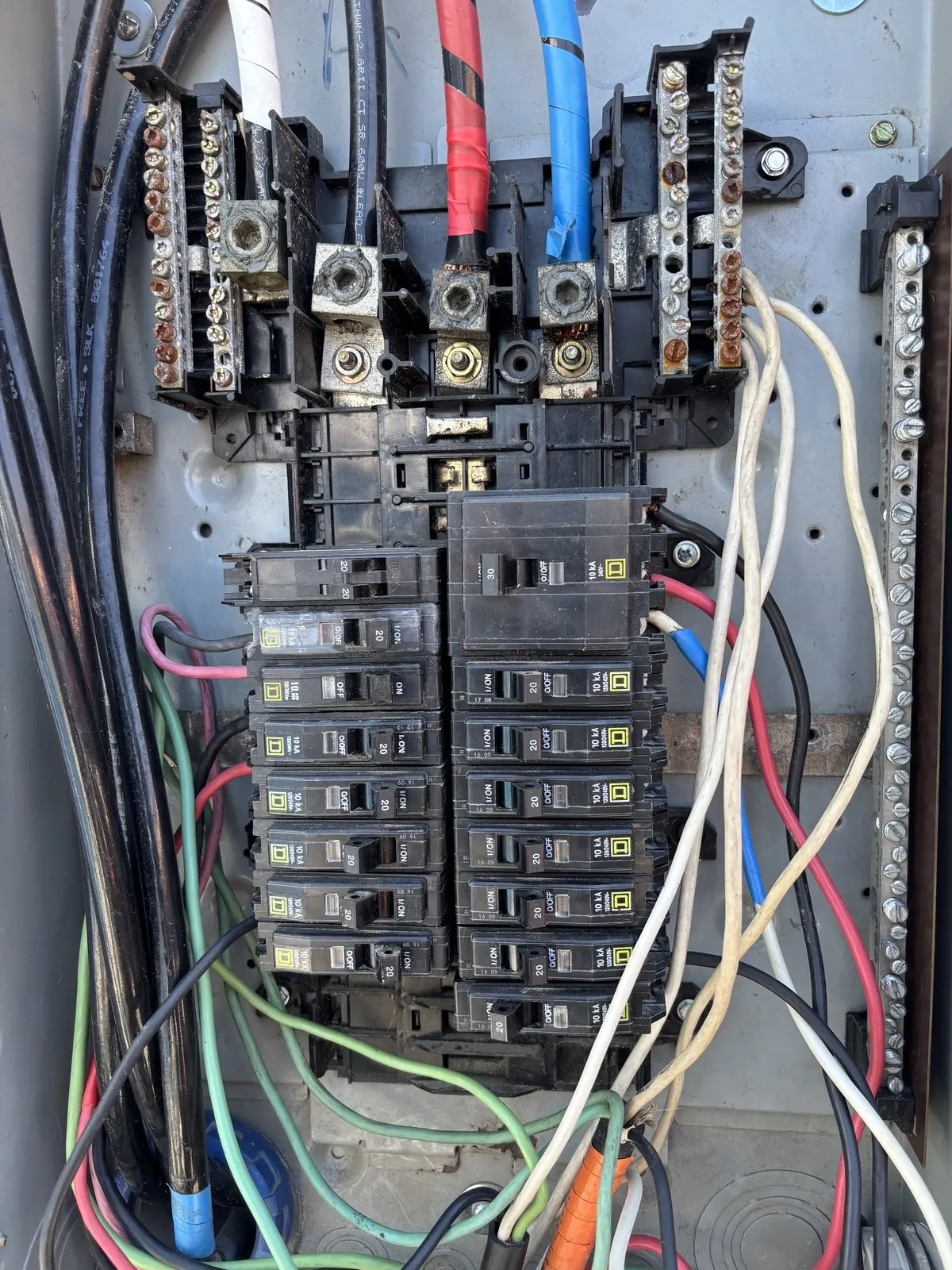
Three reasons a breaker trips, and only one of them is routine
A breaker trips for one of three reasons, and they are not equally serious.
- Overload. Too many things drawing power on one circuit at once — a space heater and a hair dryer on the same bathroom circuit, a microwave and a toaster oven both running in an older kitchen wired for far less. This is the routine one. The breaker resets and holds once the load is reduced.
- A failing appliance. A motor or heating element that's starting to fail can draw a sudden surge of current the moment it kicks on, tripping the breaker even though nothing else on the circuit changed. Unplug that one thing and the pattern usually stops.
- A short circuit or ground fault. Wiring where it shouldn't be touching itself, or touching something grounded, either from age, a nicked wire, or a pest problem in the walls — this is the one you don't reset your way past. See our note on termite damage and wiring for how that specific version shows up in New Orleans houses.
The timing test tells you which one you have
You don't need to open the panel cover or guess. Reset the breaker once and watch what happens.
Resets and holds, at least for a while: that's overload or a marginal appliance. Note what was running when it tripped, move one of those loads to a different circuit or a different time of day, and see if the pattern stops. This can wait for a normal appointment.
Trips again the instant you reset it, every time, no matter what's unplugged: stop resetting it. That pattern is what a short circuit or ground fault looks like from the outside, and every reset is another chance for a spark to happen before the breaker catches it again. This is a call-today situation, not a keep-trying one.
Why this shows up more in New Orleans houses specifically
A lot of the housing stock here — shotguns, doubles, camelbacks built well before central air and modern kitchens were the norm — was wired for a load nowhere close to what a house runs today. Add a window AC unit, a microwave, a couple of phone chargers and a space heater in winter onto a circuit designed for two lamps and a radio, and overload trips stop being occasional and start being a Tuesday. That's a different problem from a fault in the wiring, and it has a different fix: giving those loads their own circuits, sometimes with more capacity at the panel to support them. We cover that side of it in our panel upgrade page.
Older panels themselves add a second layer to this. A panel that's aged, undersized, or was a budget install decades ago can develop breakers that trip early even under a normal load, or connections at the panel that heat up and cause nuisance trips that have nothing to do with what's plugged in downstream. You genuinely can't tell a worn breaker from a real fault in the wiring by looking at it — that's a diagnosis, not a guess.
What we actually check when we come out
We don't start by swapping the breaker. We check the circuit it's protecting — what's on it, whether the load matches what the wire and breaker are rated for, and whether there's a fault in the wiring itself, a bad connection at an outlet, or a failing appliance pulling more than it should. If the breaker itself has worn out from age, that gets replaced too, but only once we know it isn't masking something behind it. Same-panel, more-capacity fixes and full circuit additions both come out of that same visit, not a guess made over the phone.
Signs it's stopped being routine
- The breaker won't hold no matter what you unplug on that circuit.
- The breaker or the panel cover feels warm to the touch.
- You hear buzzing, crackling, or a faint burning smell near the panel.
- The same breaker trips multiple times a day, not once every few weeks.
- An outlet or switch on that circuit is warm, discolored, or has a scorch mark.
Any one of those is worth a same-day call. This is also covered in our emergency electrician service if it's happening outside normal hours.
Same breaker tripping more than once?
Tell us what's on that circuit and how it's behaving, and we'll tell you whether it's a five-minute fix or something the panel needs to carry properly.
Request a free estimateOr call or text (504) 514-8224
Why does my circuit breaker keep tripping?
A breaker that trips is doing its job; the question is what it is protecting you from. Usually one of three things: too much load on one circuit, a failing appliance drawing more current than it should, or a short circuit or ground fault in the wiring. The distinction that matters is timing. If it resets and holds for a while, that is normally overload, and moving something to another circuit fixes it. If it trips instantly every time you reset it, stop resetting it and call — that pattern points at a short, and forcing a breaker closed on a short is how fires start.
Is it OK to just keep resetting the breaker?
It's fine once, to see if it holds. It is not fine as a routine — a breaker that trips again within seconds every time is telling you there is a fault it is catching, and each reset is another chance for that fault to arc before the breaker catches it again. If a breaker won't hold no matter what you unplug, that's a call-today situation, not a keep-trying one.
Why does one specific breaker trip more than the others?
Usually because that circuit is carrying more than the others — a kitchen circuit feeding a microwave and a toaster at once, a window AC unit on a circuit that was never sized for it, or an older run of wiring that was undersized when the house was built. If it's the same breaker every time, the fix is almost always giving that load its own circuit, not replacing the breaker.
Could my breaker itself be bad instead of the wiring?
Yes, breakers do wear out and can trip early or fail to hold even under a normal load, especially in older panels. But you can't tell a worn breaker from a real fault by looking at it, and replacing a breaker on a panel that's still tripping without checking the circuit behind it just hides the problem until it comes back. That distinction is worth a licensed electrician's eyes, not a guess.
Is a tripping breaker an emergency?
Not always, but some patterns are. A breaker that trips once and holds after you unplug something can usually wait for a scheduled visit. A breaker that trips instantly and repeatedly, one that's warm or smells hot, or a panel making a buzzing or crackling sound is a call-today situation — those are the signs of an active short or a failing connection at the panel.
Will a panel upgrade stop my breakers from tripping?
Sometimes — if the real problem is that your panel is undersized for how the house is actually used now (window units, a home office, an EV charger added onto a service built for 1960s appliance loads), more capacity and properly distributed circuits fix it for good. If the problem is a single failing appliance or one bad run of wire, a panel upgrade won't touch that; we diagnose first so you're not paying for the wrong fix.