No outlet where you need one? Here's what actually fixes that.
It's two hours before the reception, and the string lights, the band's amps and the caterer's warmers all need power from an outlet that doesn't exist anywhere near the tent. Or it's the morning of the shoot, and the location has one 15-amp circuit for a lighting package that needs ten times that. This is the moment almost every outdoor event and location shoot in New Orleans eventually reaches — and a chain of extension cords across the yard isn't the fix. It's the next problem, waiting for someone to trip a breaker or a bystander to catch a cord underfoot.
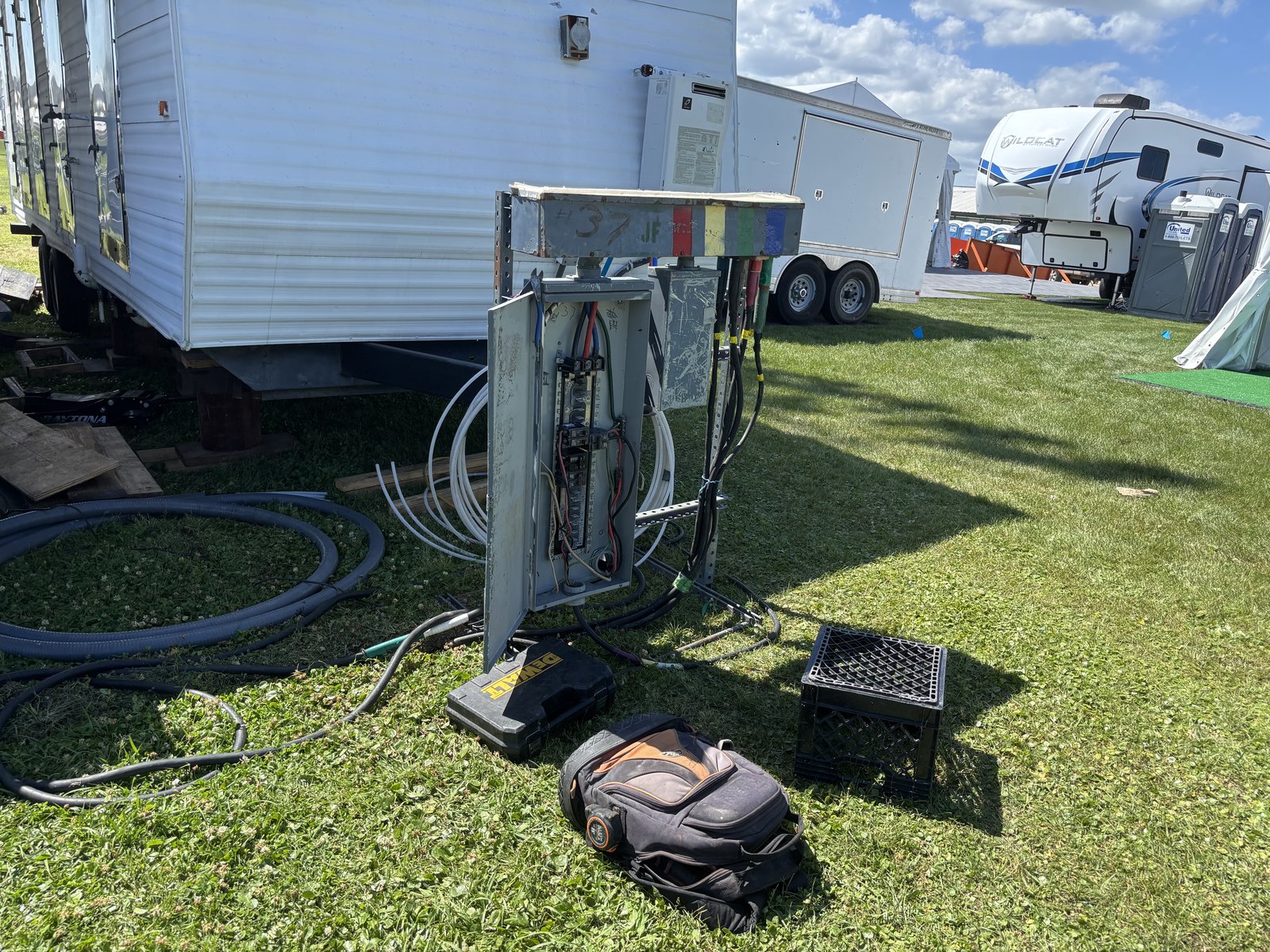
Why the extension-cord plan doesn't survive contact with a real event
One extension cord run to a lamp is fine. A dozen cords daisy-chained to feed lighting, sound, a coffee station and a bounce house is a different problem entirely. Every one of those loads pulls through the same undersized wire, the connections heat up where nobody's watching, and the first thing to fail is usually the breaker at the house — which means the power goes out mid-toast, mid-set, or mid-take. The cords themselves become a trip hazard across a route guests and crew are walking all day, and a rented generator plugged straight into a dryer outlet to "help out" is how someone backfeeds the grid and puts a utility worker in danger three blocks away.
You're not the first person this has happened to
New Orleans runs on outdoor events more than almost anywhere — second lines and parade routes most weekends, a wedding season that runs nearly year-round in courtyards with no outlet in sight, and a festival calendar that doesn't really stop. It's also one of the busiest film and TV production markets in the country, and a location scout picking a beautiful old house rarely checks whether its 1950s service can carry a modern lighting package. Every one of those situations ends at the same wall: real equipment, no real power source nearby. It's not a planning failure on your part — it's just what happens when a shoot or a celebration outgrows a building's outlets.
What actually fixes it
A licensed, load-calculated temporary power setup: a spider box or panel-fed distribution point, GFCI-protected the way any temporary or outdoor circuit is required to be, sized off what's genuinely running rather than a guess, and torn down clean when the event or the shoot day is over. No cords across the walkway, no breaker roulette, no risk to the crew running cable near water or foot traffic.
What people try first, and why it falls short
Most people don't call an electrician first — they try a rented generator and a few extension cords, because that's what's available and it seems like it should be enough. It usually is, right up until the second band act, the extra warming tray, or the additional lighting fixture that wasn't in the original plan pushes the load past what the setup can carry. A consumer generator with no transfer switch or interlock is also the exact setup that leads to backfeeding if anyone plugs it into a building circuit to "top off" power — the same danger covered in our hurricane prep guide, because the physics don't change just because it's a wedding instead of a storm.
What actually drives the cost and the timeline
There's no flat rate for this, because a backyard wedding with string lights and a DJ and a full production day with a lighting package aren't the same job. What actually moves the number:
- The load. Lighting and a DJ rig is a small fraction of what a kitchen tent, HVAC, or a film lighting package draws.
- Duration. A four-hour reception is a different mobilization than a multi-day shoot.
- Generator-fed vs. tied into existing service. Sometimes the site's own service can carry a properly distributed load; sometimes it genuinely can't and a generator is the only real option.
- How far the power has to travel. A tent at the far end of a property needs more cable run, more protection, and more time to set up and strike than one near the house.
- Lead time. Booking during Carnival or festival weekends with two days' notice costs you options, not just money.
We quote off the actual load and site, not a guess over the phone.
What happens if you skip this and hope for the best
The realistic outcomes range from mildly embarrassing to genuinely expensive. A tripped breaker mid-reception means the band stops and the lights go dark while someone finds the panel. A blown circuit on a shoot day means a lighting setup has to be re-run and the schedule slips, which on a paid crew day is real money walking out the door. A cord across a walkway that someone trips on is a liability exposure most event insurance policies specifically ask about. None of this is hypothetical — it's the same handful of failures we get called to fix after the fact, which costs more and looks worse than sizing it correctly before the first guest arrives.
What a proper setup includes
- A load calculation against what's actually running, not the size of the space.
- Properly rated distribution and cable runs, kept out of walking paths and away from water.
- GFCI protection on every temporary and outdoor circuit.
- Teardown scheduled around your event, same day or same week — nothing left behind you have to account for.
Film and TV production power
New Orleans is one of the busiest production markets in the country, and a location shoot regularly needs power a residential or commercial service was never sized for — a lighting package, a video village, a full craft services setup, sometimes for a single shoot day. That's a generator-fed distribution job with the same load-calculation and GFCI rules as any other temporary setup, planned around a schedule a location manager can actually build a day around.
Have an event or shoot date on the calendar?
Tell us the location, the date and roughly what's running, and we'll size it, quote it, and have it torn down before you have to think about it again.
Request a free estimateOr call or text (504) 514-8224
How far ahead should I book temporary power for an event?
As soon as you have a date and a rough sense of load — a few string lights and a band is a different job than a full kitchen tent or a production truck. A week or two of notice gives us room to size it properly; weekends during festival season and Carnival book up faster than that.
Can I just run extension cords for an outdoor event?
Not safely past a very small setup. Extension cords daisy-chained across a yard or a route overload fast, sit in the way of foot traffic, and aren't protected the way a proper temporary distribution setup is. A spider box or panel-fed temporary circuit with GFCI protection is the actual answer once you're running lighting, sound, catering equipment or anything with a motor.
Do you provide power for weddings and private events?
Yes — string lighting, a band or DJ rig, caterer's equipment and a tent's worth of climate control are the most common asks. We size it off what's actually running rather than guessing, and it's set up and gone before your guests arrive and after they leave.
Do you provide power for film and TV production in New Orleans?
Yes. New Orleans is one of the busiest production markets in the country, and location shoots regularly need power a residential or commercial service wasn't built to carry — generator-fed distribution, properly rated cable runs, and a setup a production coordinator can plan a shoot day around.
What determines the cost of a temporary power setup?
Mainly the load (how much you're actually running), how long it needs to stay up, whether it's generator-fed or tied into existing service, and how far the distribution has to travel across the site. A string-light-and-DJ backyard wedding and a full production day are very different jobs, and we quote based on the actual load, not a flat rate.
Is a permit required for temporary power at an event?
It depends on the scale and location — a small private event on private property is different from anything on a public route or requiring a street closure. We can tell you what your specific event needs once we know the location and scope.