Does your microwave, fridge or window AC need its own circuit?
The microwave trips the breaker the moment the toaster oven kicks on, so someone in the house has learned to run them one at a time. The lights dim every time the refrigerator's compressor starts. Neither of those is a design quirk you just live with — it's a circuit doing more than it was ever meant to, and it's one of the most common calls we get from kitchens in older New Orleans homes.
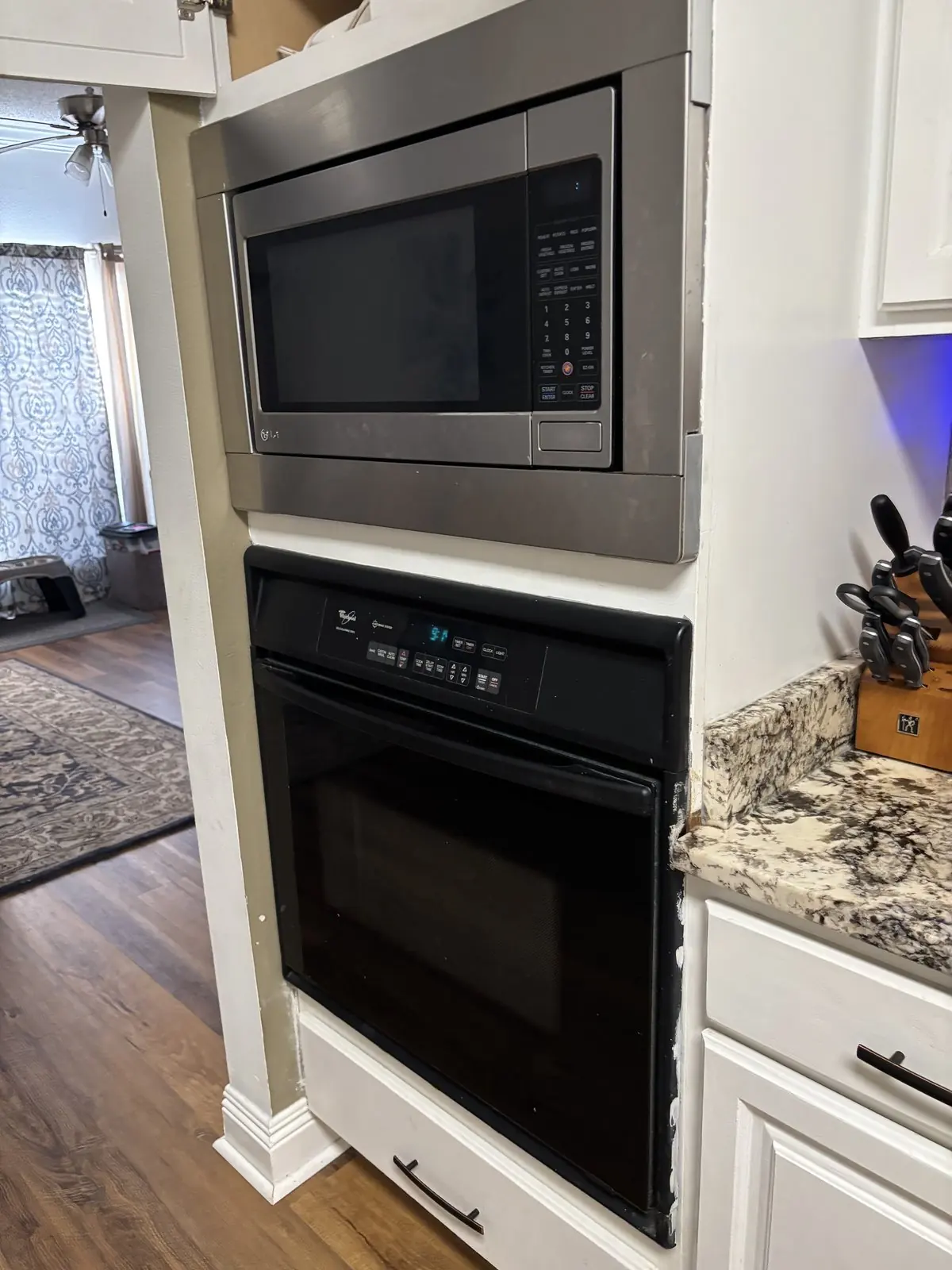
What a dedicated circuit actually is
A dedicated circuit runs from the panel to one outlet or one appliance, and powers nothing else. That means whatever that appliance draws — including the surge a motor pulls the instant it starts — has the whole circuit's capacity to itself, instead of competing with a toaster, a phone charger, or the kitchen lights for the same wire. Code requires dedicated circuits for specific appliances precisely because sharing isn't a convenience trade-off there, it's the actual mechanism that causes nuisance trips, dimming, and in the worst cases, overheated wiring.
Which appliances actually need one
- Refrigerator. Runs continuously and shouldn't lose power because something else in the kitchen tripped a shared breaker.
- Microwave, whether built-in or a higher-wattage countertop unit.
- Dishwasher and garbage disposal, each typically on their own.
- Electric range or wall oven — a heavy 240-volt load on its own dedicated circuit.
- Washing machine and electric dryer.
- Window or portable AC units, extremely common in New Orleans shotguns and doubles without central air, and one of the most frequent causes of a bedroom or living room circuit that trips every summer.
Small countertop appliances — a toaster, a coffee maker, a blender — don't each need a dedicated circuit individually. But general kitchen counter outlets are required to be split across a small number of well-protected circuits for the same underlying reason: too much sharing on one wire is exactly what causes the problems below.
Why this shows up so often in older New Orleans kitchens
A kitchen wired in the 1950s or '60s was built around an icebox-turned-refrigerator, maybe a toaster, and not much else. Nobody was planning for a microwave, a dishwasher, an air fryer and three phone chargers all drawing off the same handful of outlets. As kitchens got remodeled with modern appliances but the underlying circuits didn't get touched, the mismatch between what's plugged in and what the wiring was ever sized for is exactly what turns into daily nuisance trips and dimming lights. It's the same underlying issue covered in our signs your home needs rewiring guide, just showing up specifically in the kitchen.
Reading your own symptoms
Breaker trips only when two things run together: classic overload from sharing a circuit. Giving the bigger draw — usually the microwave — its own circuit is the fix, not a bigger breaker, which would just let more current flow through wire that isn't rated for it.
Lights dim briefly when the fridge or AC starts: normal in small doses — that's the motor's starting surge. Frequent, hard dimming across more than just that one circuit is worth checking, since it can also point at a loose connection at the panel rather than just a shared circuit. See our breaker-tripping guide for that distinction.
An outlet feels warm or has a scorch mark near where a major appliance plugs in: stop using it and call. That's a connection that's already overheating, not a future problem.
What the fix actually involves
Adding a dedicated circuit means running new wire from the panel to that appliance's location and installing a new breaker sized for it — permitted and inspected the same as any other electrical work, not a shortcut. If the panel itself is already at capacity, that's often the real story behind a kitchen that keeps running into this appliance by appliance: a panel upgrade solves it once instead of trading one nuisance trip for another every time something new gets plugged in. If the kitchen's underlying wiring is old enough to be part of a bigger picture, it may be worth pairing with a broader look at rewiring.
Tired of choosing which appliance gets to run?
Tell us what's tripping and what's plugged in when it happens, and we'll tell you whether it's one new circuit or something bigger at the panel.
Request a free estimateOr call or text (504) 514-8224
What is a dedicated circuit and why do some appliances need one?
A dedicated circuit runs from the panel to one outlet or appliance and powers nothing else. Appliances that draw a lot of current, cycle a motor on and off, or that you genuinely don't want to lose power to unexpectedly — a refrigerator, a microwave, a dishwasher, a garbage disposal, a window AC unit — are required by code to have their own circuit specifically so another device sharing that circuit can't overload it or trip it off.
Which kitchen appliances need a dedicated circuit?
Refrigerator, microwave (built-in or a high-wattage countertop unit), dishwasher, garbage disposal, and an electric range or wall oven each typically need their own circuit. A washer, an electric dryer, and a window or portable AC unit do too. Small countertop appliances like a toaster or coffee maker don't need dedicated circuits individually, but kitchen counter outlets in general are required to be on a small number of well-protected circuits precisely because of how many of them run at once.
Why does my microwave trip the breaker only when something else is running?
That's the textbook sign the microwave is sharing a circuit with something it shouldn't be — a toaster oven, a coffee maker, or general counter outlets. The two loads together exceed what the circuit and breaker are rated for, and the breaker trips to protect the wire from overheating. Giving the microwave its own circuit is almost always the actual fix, not a bigger breaker.
Why do the lights dim when the refrigerator or AC kicks on?
A motor draws a brief surge of current the instant it starts, higher than its normal running draw. If the fridge or AC is sharing a circuit — or even just sharing a panel with marginal capacity — with the lighting, that starting surge shows up as a dip. Occasional and brief is common and not urgent. Frequent, hard dimming across the whole house is worth having checked, since it can also point at a loose connection at the panel.
Do I need a permit to add a dedicated circuit?
Generally yes — adding a new circuit at the panel is electrical work that falls under the local permitting process, and it's also exactly the kind of work you want inspected, since it's protecting an appliance that draws real current. We handle the permit as part of the job rather than leaving it to you.
My panel is already full — can I still add dedicated circuits?
Sometimes with a subpanel or tandem breakers where code allows it, but a panel that's genuinely out of room is often the real reason a kitchen keeps running into this problem in the first place. If that's the case, a panel upgrade solves it once instead of working around it appliance by appliance.